the digital shift locker: how automated employee locker and asset key assignment workflows eliminate manual key-handover logs
Discover how replacing messy paper key logs with automated digital locker and asset allocation tracking protects physical assets and saves admin hours.
The Great Paper Binder Hunt in Modern Facilities
Walk into the back office of many otherwise tech-forward companies, and you will likely find a relic from the past sitting on the front desk: a heavy, dog-eared binder used to track physical locker keys, equipment toolkits, and temporary access fobs. When a team member changes shifts or a new hire joins, someone has to manually flip through pages, scratch out names, and hope the next person actually returns the key. It is a surprisingly common operational blind spot that eats up administrative hours and creates unnecessary security vulnerabilities.
01Why Manual Handoff Logs Fail Growing Teams
When companies scale past a few dozen employees, managing physical assets manually leads to inevitable friction. Keys go missing during shift changes, temporary badges are left unaccounted for, and nobody knows which employee was last assigned to locker number 42. Beyond the sheer annoyance of lost items, this creates real security and compliance risks. If a physical asset or sensitive document storage locker is compromised, piecing together an audit trail from messy handwriting or scattered sticky notes is nearly impossible.
02Automating Physical Resource Allocation Through Software
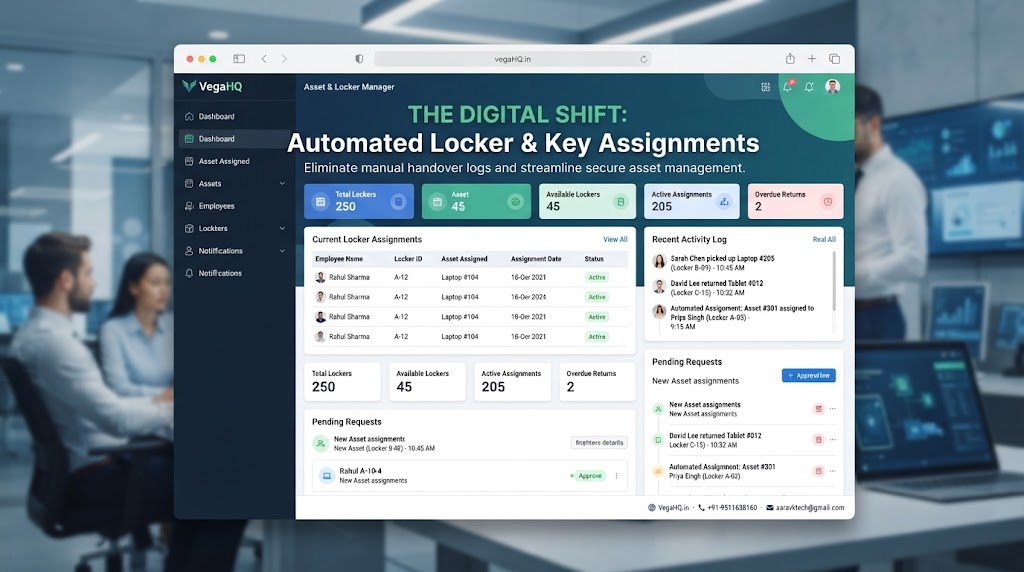
Modern workplace management requires bringing physical resource tracking into the same unified ecosystem as your HR and scheduling data. With VegaHQ, organizations can utilize a dedicated digital locker and asset key assignment workflow. Instead of treating physical keys as a separate offline problem, the platform links asset custody directly to the employee profile and active scheduling engine. When an employee checks in for a shift or starts a rotation, the system automatically logs asset checkout, records digital acknowledgment, and schedules return reminders without requiring HR or facilities personnel to lift a finger.
03Connecting Facilities Control to Daily Operations
Integrating physical item tracking with core business software yields immediate dividends. Facilities managers gain a real-time dashboard view of available versus assigned lockers, toolkits, and equipment across multiple locations. Employees benefit from clear, self-service transparency regarding their current asset responsibilities right inside their mobile app. This eliminates finger-pointing when gear goes missing and drastically reduces the time spent chasing down unreturned items at the end of employment cycles.
04My Take on Facility Automation Priorities
If your organization is still relying on paper clipboards or unverified spreadsheets to manage physical keys and lockers, upgrading to an integrated digital workflow should be a high priority. While software investments often focus purely on digital tools, plugging these physical administrative leaks saves unexpected replacement costs and frees up hours of lost facility management time every single week.
Give HR its AI upgrade
Attendance, payroll, performance and recognition — unified, automated and always in sync.
Comments
Join the conversation — share your thoughts below.
Be the first to comment.