The 2026 Return-to-Office Wave: How VegaHQ Tracks Hybrid Attendance Without the Chaos
As RTO mandates spread in 2026, VegaHQ helps HR teams track office vs remote days, enforce hybrid policies and flag no-shows automatically.
If your inbox has been full of return-to-office announcements lately, you're not imagining things. 2026 has brought a fresh wave of hybrid work mandates, companies asking employees to be in office 2, 3, sometimes 4 days a week. The catch is that almost nobody has a clean way to actually track it. That's the gap VegaHQ was built to close.
Why hybrid mandates are harder to track than full remote or full office
When everyone's remote, attendance is simple: logged in or not. When everyone's in office, a badge swipe does the job. Hybrid breaks both models. Now HR has to know which days each employee is required in office, whether they showed up, and whether exceptions were approved. Most teams are still doing this with shared spreadsheets and manual Slack check-ins, which fall apart the moment you cross 50 employees.
01The manual tracking problem nobody talks about
HR managers end up spending hours every week cross-referencing calendar invites, badge logs and manager approvals just to answer one question: is this person compliant with the hybrid policy? It's tedious, error-prone, and by the time discrepancies are found, a full pay cycle may have passed.
02How VegaHQ handles hybrid attendance automatically
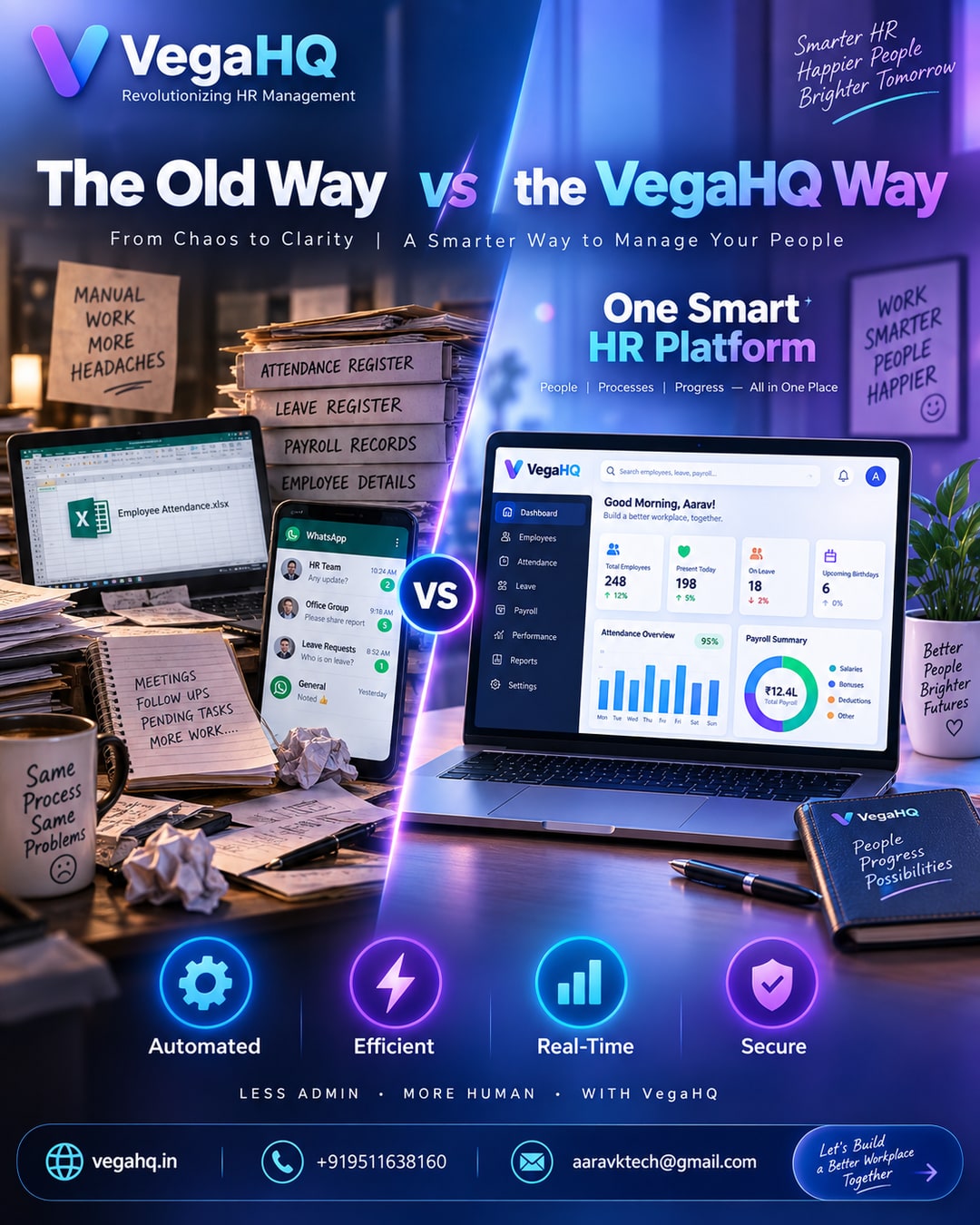
VegaHQ's attendance module lets HR set custom hybrid schedules per team or employee, for example, in-office Tuesday, Wednesday, Thursday. The platform then auto-tracks GPS-based or app-based check-ins against that schedule and flags any mismatch in real time. Managers get instant visibility into who's compliant, who isn't, and who's requested an exception, all from one dashboard instead of five different tools.
03What this means for HR leaders in 2026
As more companies formalize hybrid policies this year, having automated attendance tracking isn't a nice-to-have anymore, it's becoming the baseline expectation. Teams that get ahead of this now avoid the messy transition period where policy exists on paper but nobody can prove compliance.
My take: if you're a small team of under 30 people, you can probably survive a few more months on spreadsheets and honor system. But if you're past 50 employees or your leadership is serious about enforcing hybrid attendance this year, get a system like VegaHQ in place before the policy rollout, not after. Retrofitting compliance tracking onto an already-confused workforce is a much harder conversation than setting expectations clearly from day one.
Give HR its AI upgrade
Attendance, payroll, performance and recognition — unified, automated and always in sync.
Comments
Join the conversation — share your thoughts below.
Be the first to comment.