VegaHQ AI Burnout Radar: Riding 2026's Employee Wellbeing Trend in HR Tech
Discover how VegaHQ's AI detects burnout early, shifting HR focus from productivity to employee wellbeing in 2026.
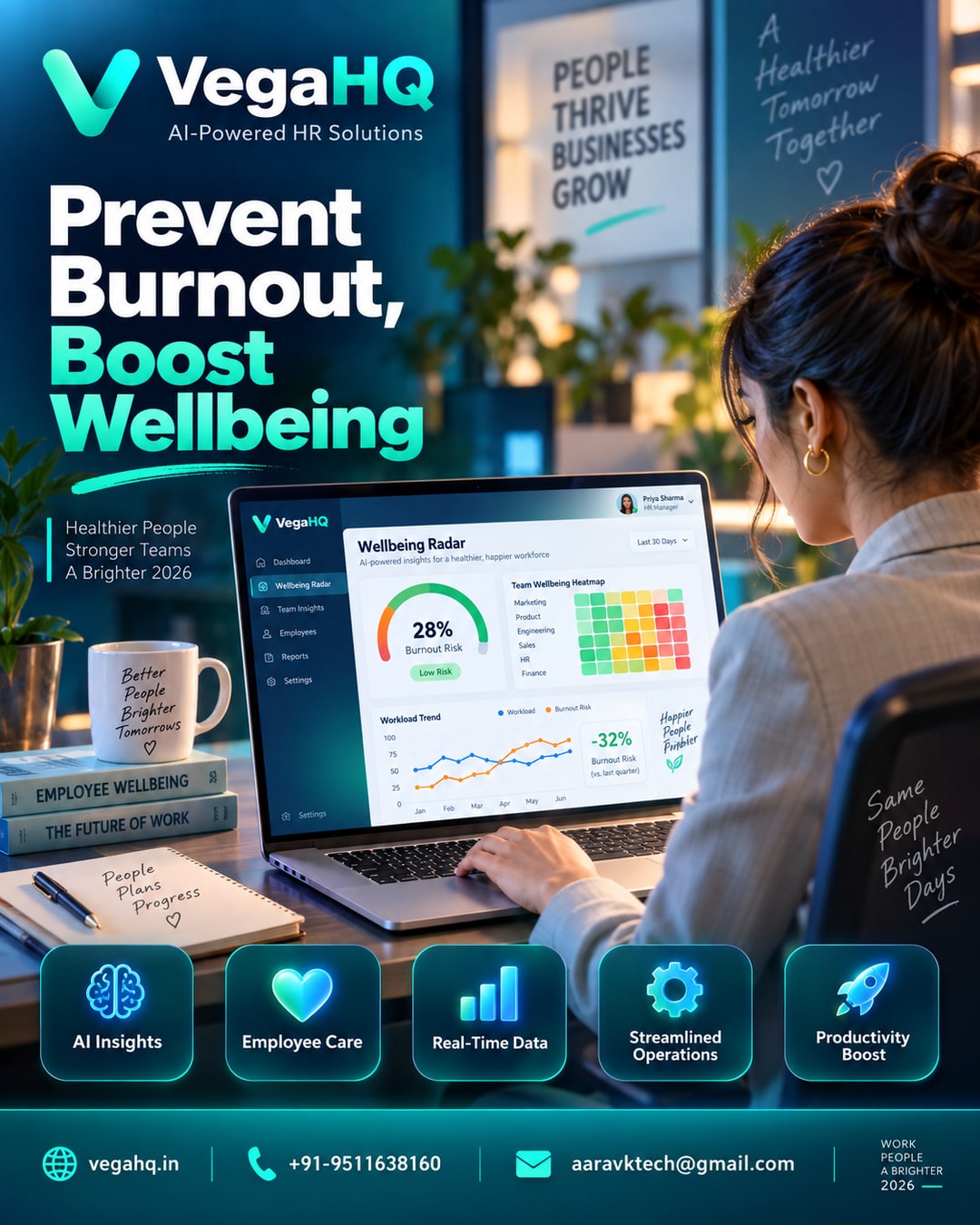
The New HR Trend Nobody Saw Coming: AI That Watches for Burnout, Not Just Attendance
For years, HR software obsessed over one question: is the employee working? In 2026, the smarter question is: is the employee okay? That shift is quietly reshaping HR tech, and VegaHQ has built its AI around exactly this trend. Here's what's changing and why it matters for your business.
01Why wellbeing tracking is replacing pure productivity tracking
Companies spent a decade optimizing attendance, GPS check-ins, and task completion. But attrition data tells a different story - most resignations don't start with a bad month, they start with months of quiet overload nobody noticed. HR teams are now realizing that catching burnout early is cheaper than replacing a burned-out employee later.
02How VegaHQ's AI actually detects burnout risk
VegaHQ's platform already tracks attendance, leave, overtime, and workload data across your organization. The new Wellbeing Radar layer analyzes these signals together - a spike in overtime combined with reduced leave usage and late-night task logins, for example, triggers a risk flag. Managers get a simple alert, not a diagnosis, so they can check in with the employee before performance or morale visibly drops.
03This isn't surveillance, and here's the difference
A fair question HR leaders ask: doesn't this just mean more monitoring? Not really. The Wellbeing Radar doesn't rate people on output - it looks for patterns of strain across a team, so leadership can rebalance workloads or offer support. It's closer to a smoke detector than a camera.
04What this means for startups vs enterprises
Smaller teams benefit because one overworked employee can quietly tank an entire department's output. Enterprises benefit because burnout patterns often hide inside big headcount numbers until attrition spikes. VegaHQ scales the same wellbeing logic across a 20-person startup or a 2,000-person company using its multi-company support.
My take: if you're an SME still running HR on spreadsheets and gut feeling, this feature alone is worth exploring VegaHQ for - catching one at-risk employee early can save you months of rehiring and training costs. If you're an enterprise already using disconnected HR tools, VegaHQ's Wellbeing Radar is worth piloting in one department first before rolling it out company-wide. Either way, this 2026 trend isn't hype - it's the direction HR tech is genuinely heading, and it's cheaper to get ahead of it than react to another resignation letter.
Give HR its AI upgrade
Attendance, payroll, performance and recognition — unified, automated and always in sync.

Comments
Join the conversation — share your thoughts below.
Be the first to comment.